
The 5 Google Algorithms Every Digital Marketer Should Know
Introduction
Google processes billions of searches every day, and behind every search result lies a complex system of algorithms designed to deliver the most relevant and helpful information to users. Google has made a number of significant algorithm changes over the years in an effort to reward websites that offer real value, improve user experience, and improve search quality. For digital marketers, business owners, and content creators, understanding these algorithms is essential for building a strong online presence and maintaining long-term SEO success.
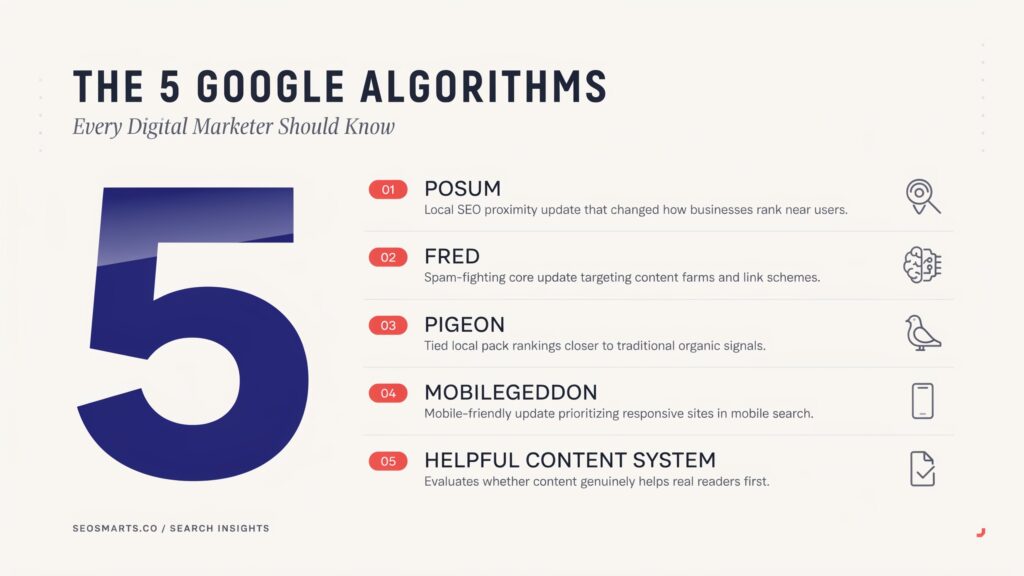
Among the many updates Google has released, five algorithms continue to play an important role in shaping modern search rankings: Possum, Fred, Pigeon, Mobile-Friendly Update (Mobilegeddon), and the Helpful Content System. Each of these updates focuses on different aspects of search, from local SEO and content quality to mobile usability and user-focused content. Let’s explore how these algorithms work and why they matter today.
1. Possum: Improving Local Search Visibility
Google introduced the Possum Update to improve the quality and diversity of local search results. The update helps users find businesses that are most relevant to their location and search intent. Instead of displaying multiple listings from similar businesses, Possum filters duplicate results and creates opportunities for smaller businesses to appear in local searches. This has made local SEO more competitive and fair for companies of all sizes.
Key Benefits of Possum
- Improves diversity in local search results
- Gives smaller businesses a better chance to rank
- Reduces duplicate business listings
- Prioritizes relevance and location accuracy
- Encourages businesses to optimize their local presence
For businesses targeting local customers, maintaining an updated Google Business Profile and collecting genuine customer reviews can significantly improve visibility.
2. Fred: Rewarding High-Quality Content
The Fred Update was designed to target websites that prioritize revenue generation over user experience. Websites filled with excessive advertisements, low-quality articles, and thin content often experience ranking declines after this update. Fred encourages website owners to focus on creating useful, informative, and engaging content that genuinely helps readers.
Today, the principles behind Fred remain highly relevant as Google continues to reward websites that provide value rather than simply trying to attract clicks.
Key Benefits of Fred
- Promotes high-quality content creation
- Reduces visibility for low-value websites
- Encourages better user experiences
- Rewards trustworthy and informative content
- Supports long-term SEO growth
Businesses that focus on educating and helping their audience are more likely to achieve sustainable search rankings.
3. Pigeon: Enhancing Local Search Accuracy
The Pigeon Update strengthened the connection between local SEO and traditional ranking factors. It improved Google’s ability to deliver accurate local search results based on a user’s location and search query. As a result, businesses with strong local optimization strategies often perform better in geographically targeted searches.
Pigeon has played a major role in helping users discover nearby businesses that match their needs while encouraging companies to focus on local relevance.
Key Benefits of Pigeon
- Improves local search accuracy
- Connects local SEO with traditional ranking signals
- Helps users find nearby businesses more easily
- Rewards businesses with strong local optimization
- Supports location-based marketing strategies
For local businesses, creating location-specific content and maintaining consistent business information can improve search visibility.
4. Mobile-Friendly Update (Mobilegeddon): Prioritizing Mobile Experiences
As mobile devices became the primary way people access the internet, Google launched the Mobile-Friendly Update, commonly known as Mobilegeddon. This update rewards websites that provide a smooth and responsive experience on smartphones and tablets. Websites that load slowly or display poorly on mobile devices may struggle to achieve strong rankings.
Today, mobile optimization is more important than ever because Google primarily evaluates websites using mobile-first indexing.
Key Benefits of Mobilegeddon
- Improves mobile user experience
- Encourages responsive website design
- Supports faster page loading speeds
- Reduces mobile usability issues
- Helps businesses reach mobile users effectively
A mobile-friendly website not only improves SEO performance but also increases customer satisfaction and engagement.
5. Helpful Content System: Putting People First
The Helpful Content System represents Google’s commitment to rewarding content created for people rather than search engines. This system evaluates whether content genuinely answers questions, solves problems, and provides valuable insights. Websites that rely heavily on keyword stuffing or create content solely for rankings often struggle under this system.
Google now places greater emphasis on expertise, experience, authoritativeness, and trustworthiness, making high-quality content more important than ever.
Key Benefits of the Helpful Content System
- Rewards people-first content
- Encourages expertise and credibility
- Improves search result quality
- Discourages keyword-focused content strategies
- Supports long-term organic growth
Businesses that consistently create helpful and original content are more likely to earn trust from both users and search engines.
Final Thoughts
Google’s algorithms continue to evolve, but their overall goal remains the same: providing users with the most relevant, trustworthy, and useful information possible. Whether it’s improving local search through Possum and Pigeon, promoting content quality with Fred, enhancing mobile experiences through Mobilegeddon, or rewarding user-focused content with the Helpful Content System, each algorithm contributes to a better search experience.
Instead of chasing shortcuts, businesses should focus on creating valuable content, delivering excellent user experiences, and building trust with their audience. These strategies will remain effective regardless of how Google’s algorithms change in the future.
To know more about Algorithms, Connect Me.