
The Human Side of SEO: Why User Experience Matters Most
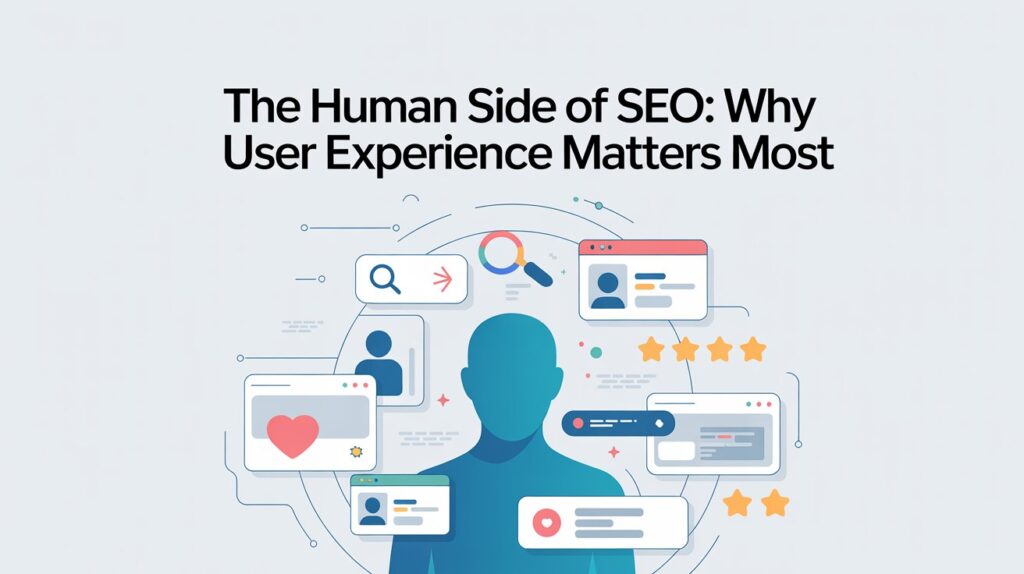
For years, search engine optimization felt like a game played by developers and algorithms. Marketers spent their days stuffing exact-match keywords into paragraphs, obsessing over meta tags, and building backlinks just to please Google’s spiders.
But things have changed dramatically. Today, Google’s algorithms are smarter than ever, and they are trying to do one primary thing: mimic human behavior.
The modern era of search has made one thing undeniably clear: Good SEO and great User Experience (UX) are the exact same thing. If you are optimizing your website purely for search bots while ignoring the real humans reading it, your rankings will inevitably suffer.
Here is why user experience is the ultimate foundation of modern SEO, and how you can optimize for both.
1. Google Tracks How Humans Behave on Your Site
Google doesn’t just look at your text; it measures how real people interact with your pages. Signals like dwell time (how long someone stays on your page) and bounce rate (how quickly they leave) tell search engines everything they need to know about your content’s quality.
- The UX Problem: If a user clicks your link from a search result, faces a confusing layout, and hits the “Back” button within three seconds, Google registers a “pogo-stick” effect.
- The SEO Impact: To the algorithm, a fast exit implies your page didn’t solve the user’s problem. Do this enough times, and your rankings will plummet, no matter how great your keywords are.
2. Page Speed is No Longer Optional
Nobody likes waiting for a slow website to load. In fact, data shows that a delay of even a few seconds can cut your conversion rates in half.
Google codified this preference into its ranking systems using metrics called Core Web Vitals. These metrics measure exactly how fast your page loads, how quickly it becomes interactive, and whether the visual elements shift layout unexpectedly while loading.
The Fix: Optimize your images, leverage browser caching, and use a clean WordPress setup. A fast site keeps users happy and satisfies Google’s core technical requirements.
3. The “Answer-First” Content Layout
When users search for information online, they want answers immediately. Traditional blog structures often bury the main answer deep under paragraphs of fluff to inflate word counts.
- The Human Approach: Modern UX design utilizes an “answer-first” framework. Give the user the direct answer to their query in the very first paragraph using clear, bold text.
- The SEO Benefit: This structure satisfies user intent instantly, increasing the likelihood that they will stay on the page to read your deeper analysis. Even better, it makes your content highly eligible to be pulled into Google’s featured snippets and AI search summaries.
4. Seamless Mobile Navigation
More than half of all global web traffic originates from mobile devices. Google operates strictly on mobile-first indexing, meaning it ranks your entire website based on how well it performs on a smartphone screen, not a desktop screen.
UX for Mobile: Ensure your fonts are easily readable without zooming, your menus collapse into clean navigation, and your buttons are large enough to be easily tapped with a thumb.
Conclusion: Build for Humans, Optimize for Bots
At the end of the day, Google’s goal is to present its users with the best possible answer presented in the most digestible way. When you shift your mindset from “how do I trick the algorithm” to “how do I genuinely help the reader,” your user experience improves naturally—and your search engine rankings will follow.
I am Ashker Ali Best SEO strategist in thrissur please connect for your growth.